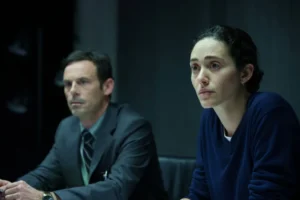
The Odyssey Movie Christopher Nolan Ending Explained: Live Action Plot Twist and Post-Credit Breakdown
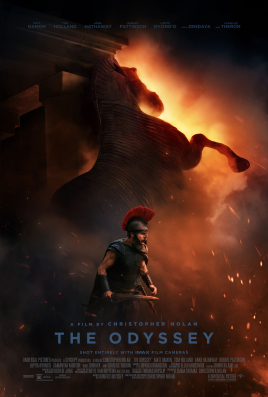
If you just left the theater feeling confused, this guide to The Odyssey Movie Christopher Nolan ending explained is for you. Christopher Nolan’s new epic transforms Homer’s ancient poem into a darker narrative. The ending is not a simple happy homecoming; it features a twist that many viewers do not anticipate until the final act.
Is There Anything at the End of The Odyssey Movie?
Let’s address the question everyone is searching for: is there anything at the end of The Odyssey? No, there is no post-credit scene and no mid-credit scene. Once the credits begin to roll, the story is over.
This fits Nolan’s style perfectly. He has never been one to hint at a sequel with a hidden scene after the runtime ends. His films conclude fully, and this one is no exception. The final moments before the credits hit hard enough on their own, so an extra scene would have actually diminished the impact.
Nolan didn’t simply shorten the poem for time; once you explore the odyssey movie changes from book, it’s clear he restructured whole sections to create a much heavier, more grounded story. Characters who barely appeared in Homer’s version receive entirely new arcs, and even the gods are portrayed differently from the original text.
The Odyssey 2026 Live Action Ending: Full Climax Breakdown
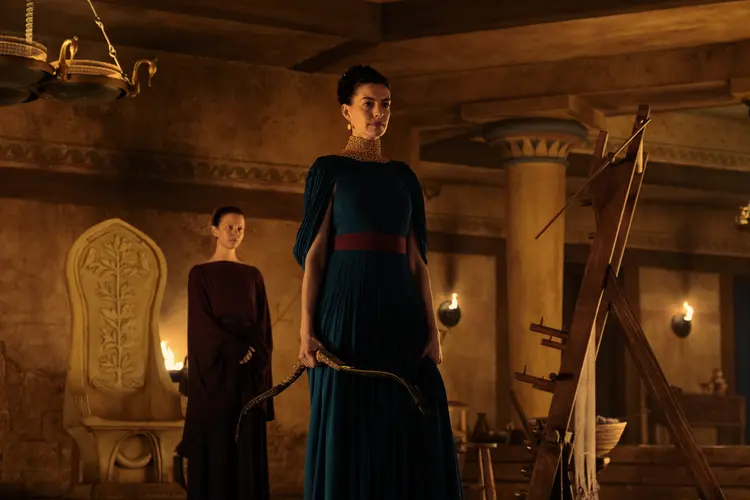
Here is where The Odyssey 2026 Live Action Ending gets highly complex. Throughout the entire movie, Odysseus (played by Matt Damon) keeps seeing vivid visions of Athena (Zendaya). She constantly appears during his darkest hours, offering crucial advice and guiding him through deadly coastal perils. Because of these scenes, most viewers naturally assume that she is a genuine goddess interacting with humans, exactly like the divine character written in the original poem.
She isn’t.
In the final act, Nolan reveals what really occurred during the fall of Troy. It is not the clean, heroic victory we witnessed earlier in the film; it’s a massacre. Homes are in flames. Innocent people die. In the middle of this chaos, Odysseus’s men drag a young priestess of Athena before him and kill her.
That priestess shares the face of the “goddess” who has been appearing to him throughout the movie.
It’s a painful revelation. Athena was never a real deity alongside him. She represented his own mind, forcing him to relive his guilt repeatedly. Every vision and piece of divine guidance was Odysseus’s way of punishing himself for what he allowed to happen and never prevented.
This connects to the movie’s primary theme: the Trojan Horse. Nolan does not treat it as a clever war trick anymore. He presents it as a weapon of mass destruction, closer to a bomb than a strategy. Odysseus does not see himself as someone who won the war cleverly. He regards himself as the man who opened the door to a slaughter. That guilt is the true monster pursuing him the entire journey home, not Poseidon.
If this theme feels familiar, it is intentional. It mirrors the moral weight Nolan explored in his film Oppenheimer: a brilliant idea that leads to mass death, where the creator cannot escape the consequences of what he has made.
Even the sea monster sequences carry the same weight. The Christopher Nolan The Odyssey horror sequence involving Scylla and Charybdis is not just a scary moment. Odysseus secretly maneuvers his ship toward Scylla instead of the whirlpool Charybdis, knowing it will cost six of his men their lives. He never informs his crew of the choice he made. When they realize it, they are furious. It is yet another instance where Odysseus survives by sacrificing others, and it weighs on him just as heavily as the events in Troy.
Why Odysseus Abandons the Throne of Ithaca
After Odysseus finally returns home and the violence in the palace subsides, you might expect a warm reunion, a crown placed back on his head, and his family restored. However, that is not what occurs.
Instead, Odysseus comes to a difficult realization: the war never truly ended for him. Years of killing, lying to his own men, and carrying guilt over Troy have left him too broken to simply return to being a king or a husband as if nothing happened.
So he makes an unexpected choice. He hands the throne over to his son, Telemachus (Tom Holland), and sets out alone on a small boat into the open ocean.
Nolan intentionally leaves the meaning of this open. There are two ways to interpret it:
- Exile: Odysseus believes he is too damaged and dangerous to stay, and leaving is the only way to protect the people he loves.
- Redemption: Giving up power completely is his way of finally atoning for his past, choosing to let go rather than clinging to a throne he does not feel he deserves.
Neither interpretation is wrong. That’s the point. Nolan wants you to grapple with the discomfort instead of offering you a neat answer.
The Unofficial War Trilogy: Dunkirk, Oppenheimer, and The Odyssey
Many critics are already connecting this film with two earlier movies by Nolan. Together, they form what seems like an unofficial trilogy that explores war and its costs.
| Movie Title | Core War Element | Type of Trauma Explored | Final Character Outlook |
|---|---|---|---|
| Dunkirk | Survival, retreat | Fear, chaos | Guarded relief |
| Oppenheimer | The atomic bomb | Guilt, responsibility | Haunted, unresolved |
| The Odyssey | The Trojan Horse | Guilt, PTSD | Ambiguous, open-ended |
Each movie examines a different aspect of war. Dunkirk focuses on survival. Oppenheimer addresses the creation of something irreversible. The Odyssey falls somewhere in between, following a man who must live with his actions long after the fighting concludes.
That is also why the monsters in this movie do not feel like typical fantasy creatures. Scylla and Charybdis are not just there to scare viewers on an IMAX screen. They symbolize impossible choices in war, situations where surviving means someone else must perish. Nolan portrays every “monster” in the film less as a beast and more as a consequence that Odysseus must confront.
Frequently Asked Questions
Is Zendaya’s Athena a real goddess in the movie?
No. She is a mental manifestation of Odysseus’s guilt over a priestess his men killed during the fall of Troy.
Why does Odysseus leave Ithaca at the end?
He feels too broken by war and guilt to rule or live a normal life, so he gives the throne to his son and sails away instead.
Does Christopher Nolan’s The Odyssey have a post-credit scene?
No. There is no scene during or after the credits. The story concludes completely once the final scene fades out.
How does the movie connect to Oppenheimer?
Both films focus on a man haunted by something destructive he created. In Oppenheimer, it’s the bomb. In The Odyssey, it’s the Trojan Horse.
Conclusion
At its core, The Odyssey Movie Christopher Nolan ending explained reduces to one idea: winning a war does not mean you can walk away unscathed. Nolan takes one of the oldest stories ever told and turns it into an exploration of guilt, grief, and the true cost of survival. It is not the triumphant return Homer wrote; it is something heavier, and honestly, something that lingers much longer.

I am a Professional movie blogger and SEO writer at StartlightNovels.com, dedicated to creating in-depth movie reviews, breakdowns, and entertainment content with clear and user-friendly explanations.