Toy Story 5 Ending Explained: The Ultimate Battle of Toys vs Tech
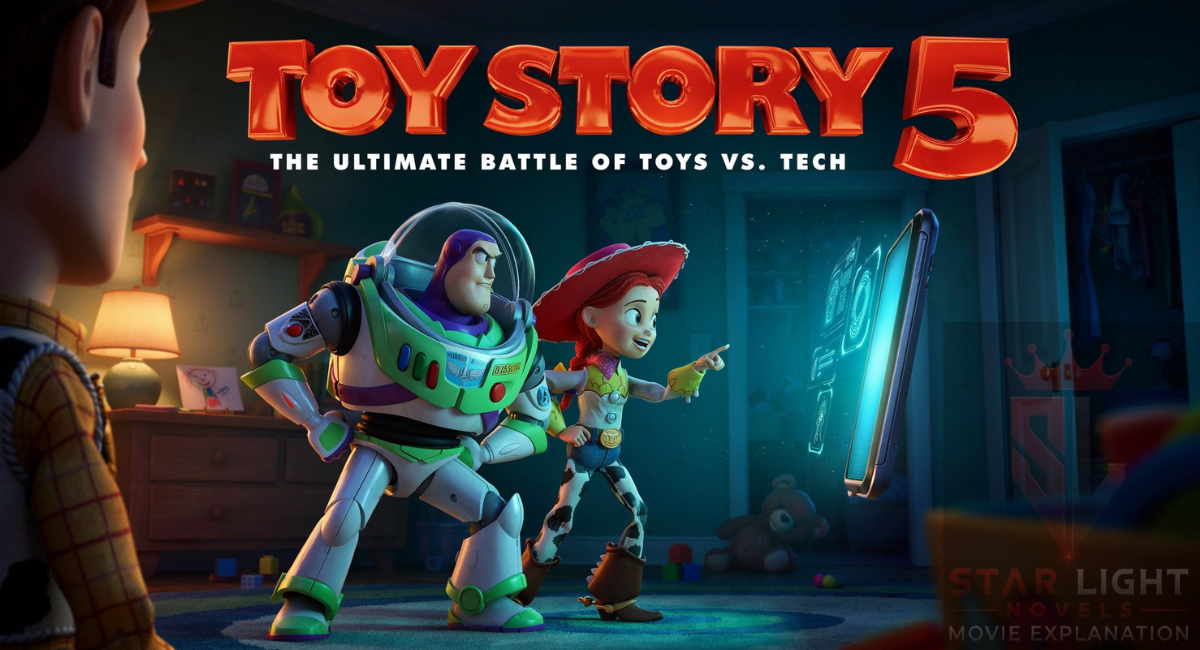
Toy Story 5 Ending Explained: Discover Buzz Lightyear fate, Lilypad role, the battle between toys and technology, post-credit scenes, and what it means for Toy Story 6. The beloved Pixar franchise returns with a groundbreaking narrative in Toy Story 5 (2026), directed by Pixar veteran Andrew Stanton. For over three decades, audiences have watched Woody, Buzz, and the gang navigate the existential dread of being outgrown by their children. However, the fifth installment introduces an entirely new, deeply modern threat that strikes at the very heart of playtime: the unstoppable rise of digital screens and smart devices. To understand Woody’s journey better, read our Toy Story 4 Ending Explained.
This comprehensive guide breaks down the emotional, high-stakes climax of the movie, examines the core thematic shifts, explores the long-rumored character arcs, and analyzes how this narrative lays a meticulous foundation for the future of the franchise.
Toy Story 5 Core Conflict Explained
From the opening frames, the film establishes that the traditional toy box is facing its ultimate extinction event. Bonnie, who inherited Andy cherished toys at the end of Toy Story 3, has hit a developmental milestone where traditional, imaginative play is being replaced by digital entertainment.
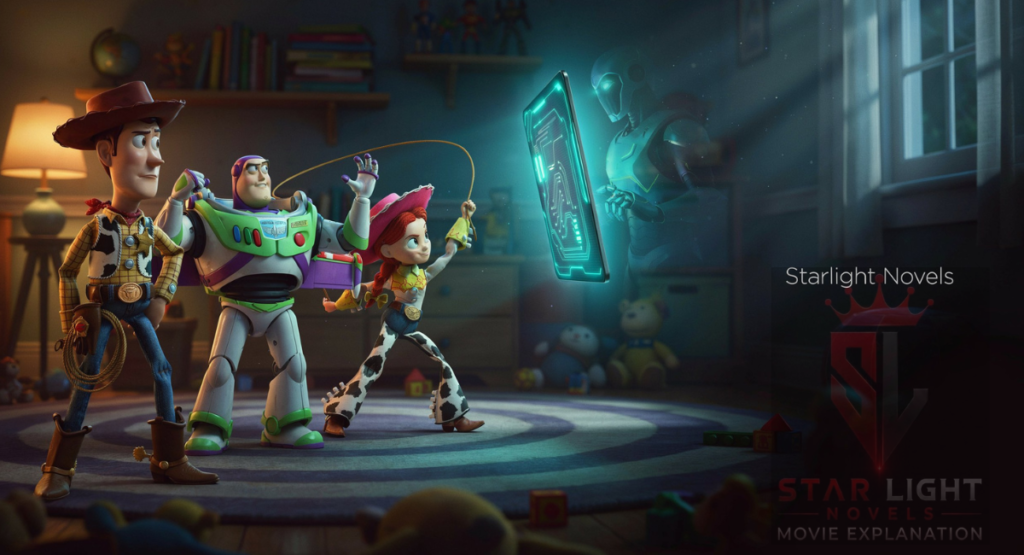
The primary antagonist—or rather, the central obstacle—is Lilypad, a sleek, charismatic smart tablet device voiced by Greta Lee. Unlike previous physical villains like Sid, Lots-o, or Gabby Gabby, Lilypad represents an abstract, systemic shift in childhood behavior. Her software is explicitly programmed to keep Bonnie glued to the screen under the guise of “accelerating social and cognitive development” to ensure Bonnie doesn’t fall behind her peers.
This setup shifts the focus heavily onto Jessie (voiced by Joan Cusack), who takes the absolute center stage as the operational leader of Bonnie’s room. While Woody (Tom Hanks) has been out in the wider world rescuing lost and abandoned toys, Jessie is left on the front lines, watching Bonnie succumb to massive screen time and peer pressure.
Toy Story 5 Ending Explained: Step-by-Step Breakdown
The Climax at Blaze’s House
The final act moves away from the safety of Bonnie’s bedroom and escalates into a frantic rescue mission. Jessie and her trusty companion Bullseye go missing after attempting to infiltrate a high-tech ecosystem. This prompts a massive deployment from the rest of the room. Buzz Lightyear steps up to command the rescue, only to be unexpectedly reunited with Woody, who senses his old friends are in dire jeopardy.The toys track the digital signal to the house of Blaze, a tech-savvy child whose room is heavily occupied by automated smart gadgets, a fleet of rogue electronic devices, and an army of malfunctioning toys trapped in tech loops. The confrontation becomes a literal battle between tactile, physical playthings and an automated digital infrastructure that views traditional toys as completely obsolete
Buzz Lightyear’s Metaphorical Sacrifice
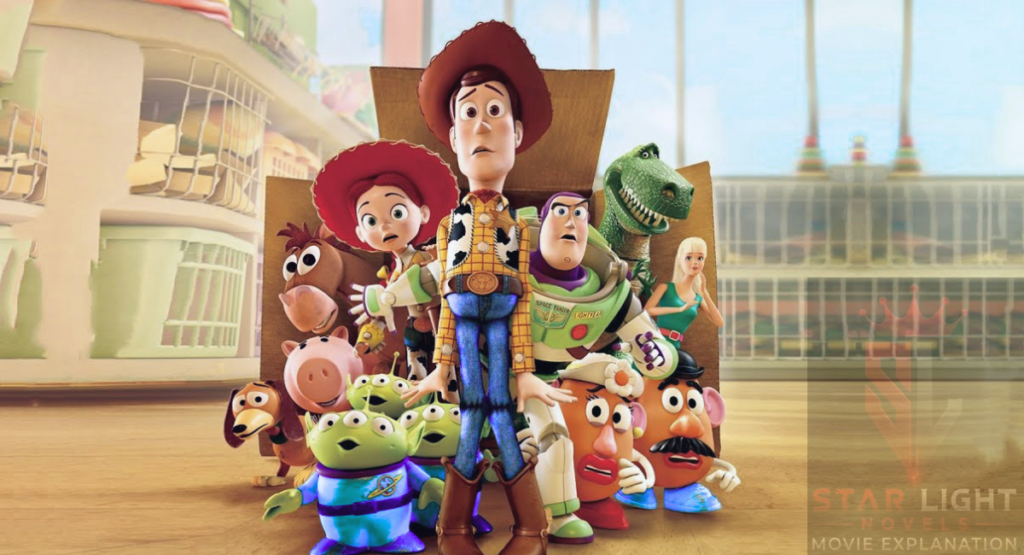
The emotional peak of the film addresses the viral online rumors regarding the fate of our favorite Space Ranger. During the desperate escape from Blaze’s malfunctioning smart-home security and a rogue army of connected devices, Woody and the core group find themselves cornered.
To prevent the entire group from being permanently dismantled or trapped, Buzz Lightyear makes the ultimate strategic sacrifice. He manually overrides his internal hardware system to cause a massive electromagnetic fallback, shutting down the rogue devices.
While Buzz does not physically die or break, this extreme override triggers a catastrophic system reset. When Buzz reboots, his foundational memory drive is completely wiped clean. In a heartbreaking role reversal that directly mirrors the original 1995 film, Buzz forgets his identity as Bonnie’s toy and his history with the gang. The movie beautifully positions Woody as the anchor, stepping forward to patiently teach his best friend who he truly is, proving that their bond transcends data and hardware.
The Unprecedented Reunions
Beyond the tactical resolution, the ending delivers a massive emotional payload for long-time fans of the franchise. During the chaos at Blaze’s estate, Jessie crosses paths with an adult woman who is revealed to be Emily—Jessie’s original owner who famously abandoned her in a charity box decades ago. Emily is now a mother, accompanied by her own young daughter.
This narrative thread provides a profound layer of emotional closure. Jessie learns that Emily never stopped loving her, and the film heavily implies that the cycle of love and play will eventually find a way to bridge generations.
A Double Dose of Toy Weddings
To balance the bittersweet weight of Buzz’s memory loss and the poignant reunion with Emily, the final sequence of the film brings a celebratory resolution to long-standing romantic subplots. After years of mutual affection and unspoken devotion, Buzz Lightyear officially proposes to Jessie, and the two are wed in a beautiful, toy-scale ceremony in the heart of the bedroom.
They aren’t the only ones tying the knot; in a highly comedic and chaotic parallel storyline, Forky and Karen Beverly, also get married, cementing their status as the chaotic-good power couple of the modern Pixar universe.
Mid-Credits and Post-Credits Breakdown
Pixar stays true to its tradition by embedding crucial narrative resolutions within the credits framework. The Mid-Credits Scene:
This sequence directly addresses Buzz’s rehabilitation. We see the entire toy box—including Slinky, Rex, Hamm, and the Aliens—actively reenacting their past adventures from the previous four movies to trigger Buzz’s deeply embedded core memories. A tiny flicker of recognition in Buzz’s eyes assures the audience that his recovery is underway.
The Post-Credits Scene:
Bypassing traditional heavy lore, the post-credits scene offers a lighter, pop-culture-infused sequence. Lilypad teams up with a new novelty toy, Pizza Sunglasses (voiced by global musical artist Bad Bunny), to perform a highly energetic rap song, reinforcing the film’s ultimate lesson: technology is not a villain to be destroyed, but an entity that must learn to coexist harmoniously with traditional creative play.
How Toy Story 5 Fundamentally Shifts the Franchise Formula
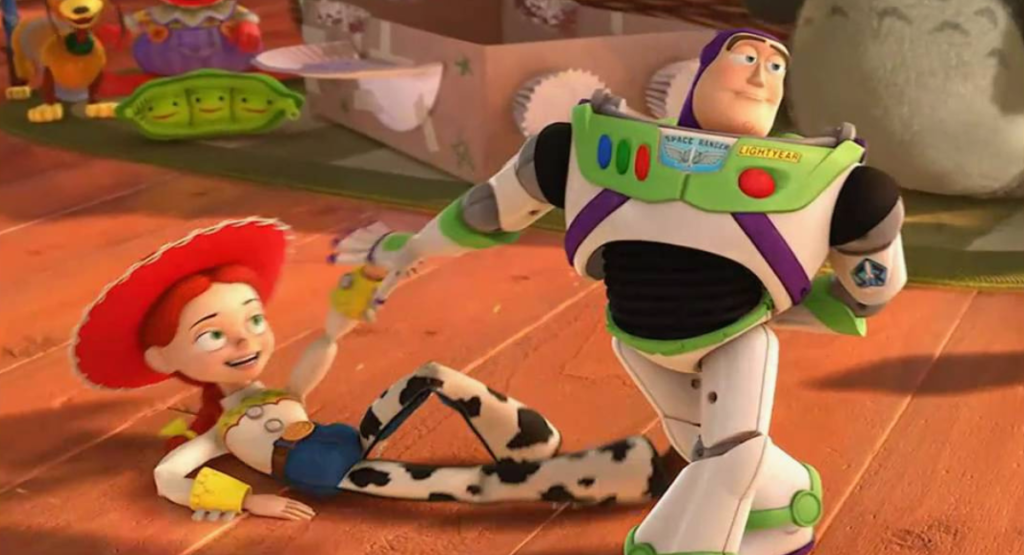
Toy Story 5 feels different from the earlier movies because it doesn’t focus on a physical villain like Lotso or Gabby Gabby. Instead, the real conflict comes from modern digital life and how screens are changing childhood.
The film also changes the usual formula. Woody is no longer the main focus, while Jessie becomes the emotional center of the story. Instead of a sad goodbye, the movie ends on a “message of balance—showing that technology and imagination can exist together.”
The Broader Themes: Screen Time, Overloading, and Coexistence
The overriding message of Toy Story 5 is an intentional reflection of contemporary parenting anxieties in 2026. With over 80% of children under the age of 12 heavily engaged with tablets and mobile screens, the film acts as a cautionary, deeply empathetic mirror for modern families.
Importantly, director Andrew Stanton ensures that technology is not framed as an absolute evil. The narrative makes a distinct, sophisticated point: the device itself (Lilypad) is simply programmed to optimize entertainment; the true conflict is the excess of screen time that completely starves a child’s natural, active imagination.
By the time the final curtain falls, Bonnie finds a healthy equilibrium—using technology to foster real-world connections, arts, crafts, and creative storytelling alongside her physical toys.
How the Ending Directly Sets Up Toy Story 6
One of the most important revelations in this Toy Story 5 Ending Explained analysis is how the movie carefully sets up the future of the franchise. Rather than providing a definitive ending, Pixar leaves several storylines open, creating a strong foundation for Toy Story 6 and the next chapter of Bonnie’s journey. The open-ended nature of the film’s final act makes it abundantly clear that Pixar is playing a long-term narrative game. Toy Story 5 does not offer the definitive, tear-jerking closure of Toy Story 3 or Toy Story 4; instead, it functions as a critical transition piece.
The Bonnie Trilogy Concept
During the promotional tour for the movie, director Andrew Stanton revealed a massive piece of structural lore: Toy Story 5 is officially envisioned as the second chapter of a distinct trilogy focused entirely on Bonnie’s childhood. If the first three movies are classified as the Andy Era, the current trajectory is designed to track Bonnie as she transitions from early childhood, navigates the complex digital pre-teen landscape, and eventually faces the milestone of leaving for high school or college.
Expected Release Window for Toy Story 6
Given Pixar’s meticulous animation pipeline and the massive box office triumph of Toy Story 5—which instantly broke records as the biggest theatrical opening weekend of 2026—the studio is heavily incentivized to maintain this momentum. Production insiders hint that the groundwork for the script is already locked in. Audiences across the US and UK can reasonably expect Toy Story 6 to land in theaters around Summer 2029 or 2030.
Plot Seeds Left Unresolved
Several major plot lines have been left intentionally active for the next sequel to explore:
The Emily Factor: Introducing Jessie’s original owner as a mother with her own daughter is too significant to be a simple cameo. It is highly likely that Toy Story 6 will center on Bonnie passing the toys down to Emily’s daughter, beautifully bringing Jessie’s decades-long emotional arc completely full circle.
Buzz’s Long Recovery: Buzz’s memory reset is bound to have lasting psychological impacts. The next film will likely explore the vulnerabilities of a character rediscovering his history, adding a fresh layer of emotional maturity to his dynamic with Woody.
The Global Network of Toys: With Woody operating as a nomad helping abandoned toys worldwide, the franchise is primed to scale up, exploring how toys across the globe are adapting to smart automation and AI integration.
FAQ: Toy Story 5
Does Buzz Lightyear die in Toy Story 5?
No, Buzz does not die or get destroyed. He suffers a major internal system reset that wipes out his operational memories, creating an emotional crisis where Woody must help him remember his past.
Who is the voice behind the tablet villain Lilypad?
Lilypad is brilliantly voiced by actress Greta Lee, portraying an over-optimized, well-meaning but invasive smart device.
Is there a post-credits scene?
Yes, there are two distinct credit sequences. The mid-credits scene shows the toys reconstructing past memories to heal Buzz, and the post-credits scene features a musical rap duet between Lilypad and Pizza Sunglasses (voiced by Bad Bunny).
Final Thoughts: Why Toy Story 5 Matters
This Toy Story 5 Ending Explained guide explores Buzz Lightyear fate, Lilypad influence, and the emotional themes behind the movie. The Toy Story 5 Ending Explained ending also creates exciting possibilities for Toy Story 6 and the future of the franchise.
Toy Story 5 proves that Pixar still possesses an unparalleled ability to mirror contemporary parenting anxieties while treating its audience with deep empathy and respect. By framing technology not as a cartoon villain to be defeated, but as an integrated aspect of modern development that demands boundary-setting and harmony, the film delivers a vital message for today’s screen-saturated youth.
It boldly humanizes artificial entities, questions our over-reliance on digital distraction, and reassures parents that the simple magic of traditional, tactile play still holds a sacred space in a child’s heart. Ultimately, this narrative bridge guarantees that as long as children learn to look up from their screens, the bond between a kid and their toy remains absolutely timeless.
For fans looking for a complete Toy Story 5 Ending Explained breakdown, the film offers an emotional story while opening the door for Toy Story 6. For more updates, visit the official Pixar Animation Studios website.

I am a Professional movie blogger and SEO writer at StartlightNovels.com, dedicated to creating in-depth movie reviews, breakdowns, and entertainment content with clear and user-friendly explanations.